Taking Control of the Narrative - Indigenous Voices Rise in the 1980s
The 1980s in Australian film and media marked a significant turning point, a decade where the whispers of Indigenous presence began to coalesce into more assertive and self-determined voices. While non-Indigenous filmmakers continued to explore Indigenous themes, often with varying degrees of sensitivity, the decade witnessed the crucial establishment and growth of Indigenous-controlled media organizations and the emergence of powerful Indigenous filmmakers who began to shape their own narratives. This chapter explores this dynamic landscape, celebrating the burgeoning agency while critically examining the persistent challenges.
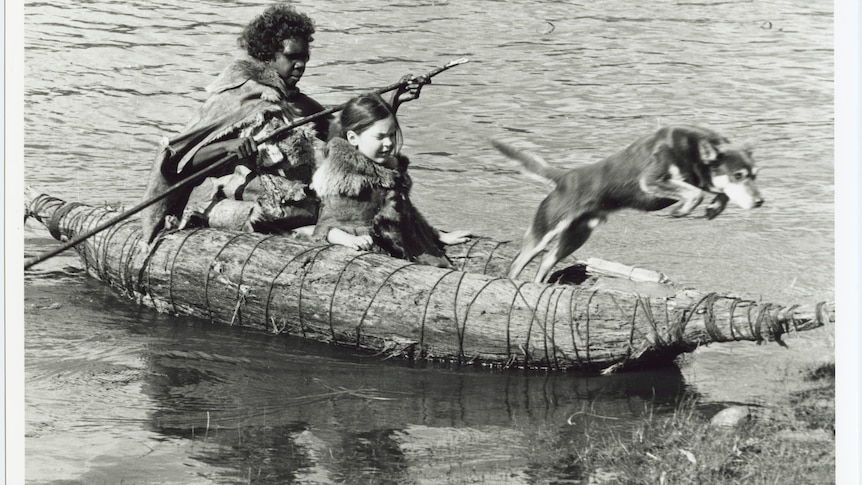
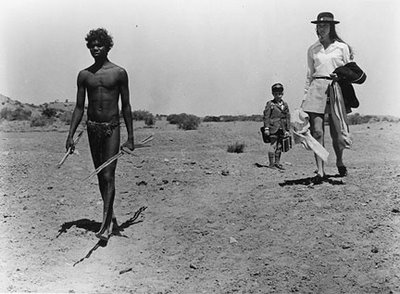
John Honey’s 1980 film, Manganinnie, stands as a poignant example of a non-Indigenous filmmaker attempting to grapple with the devastating history of colonial violence against Indigenous Australians, specifically the Tasmanian genocide. Mawuyul Yanthalawuy’s lyrical performance as Manganinnie, traversing the landscape in search of her lost people and ways, offers a powerful emotional core to the film. The narrative’s focus on the Black Drive of 1830 and the near annihilation of Tasmanian Aboriginal people is a crucial, albeit belated, cinematic acknowledgement of this horrific history. However, even with its sensitive approach and Yanthalawuy’s compelling presence, the film remains framed through a non-Indigenous perspective. The very act of a non-Indigenous director telling this profoundly Indigenous story raises questions about whose gaze ultimately shapes the narrative and whether the complexities of Indigenous experience and perspective are fully realized.
The establishment of the Central Australian Aboriginal Media Association (CAAMA) in 1980 by Indigenous visionaries John Macumba and Freda Glynn, alongside Phillip Batty, represents a monumental shift in the landscape. CAAMA was not merely another media outlet; it was a declaration of Indigenous sovereignty over their own stories and voices. Starting with radio broadcasts and ambitiously expanding into video and film production, CAAMA’s foundational goal was to create an Indigenous-run media centre, driven by Indigenous perspectives, ownership, and cultural priorities. This initiative was a radical act of self-determination, challenging the historical dominance of non-Indigenous control over the representation of Aboriginal and Torres Strait Islander peoples. CAAMA’s early work in radio, broadcasting in multiple Indigenous languages alongside English, immediately addressed the linguistic and cultural needs of communities in Central Australia, providing a vital platform for local news, music, and cultural expression.
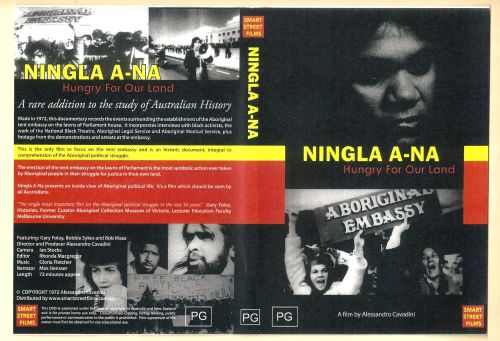
The 1981 film Two Laws, produced by the Borolola Community with non-Indigenous directors Alessandro Cavadini and Carolyn Strachan, offers a fascinating model of collaborative filmmaking. The film’s focus on the mistreatment of Indigenous people and its incorporation of historical re-enactments are significant. However, the truly groundbreaking aspect of Two Laws lies in its production model. By prioritizing Indigenous ownership and decision-making in the storytelling process, the film attempted to move beyond conventional power dynamics in filmmaking. This approach, which can be seen through the lens of Indigenous dramaturgy and an embrace of Standpoint Theory, aimed to center an Indigenous view of historical events, offering a powerful counter-narrative to dominant colonial accounts. Two Laws stands as an early, albeit complex, example of a film striving for genuine collaboration and Indigenous control over their own history on screen.
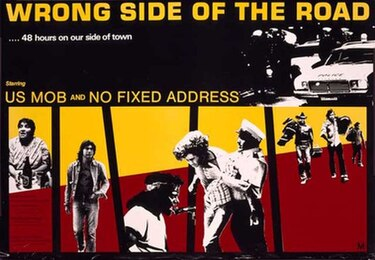
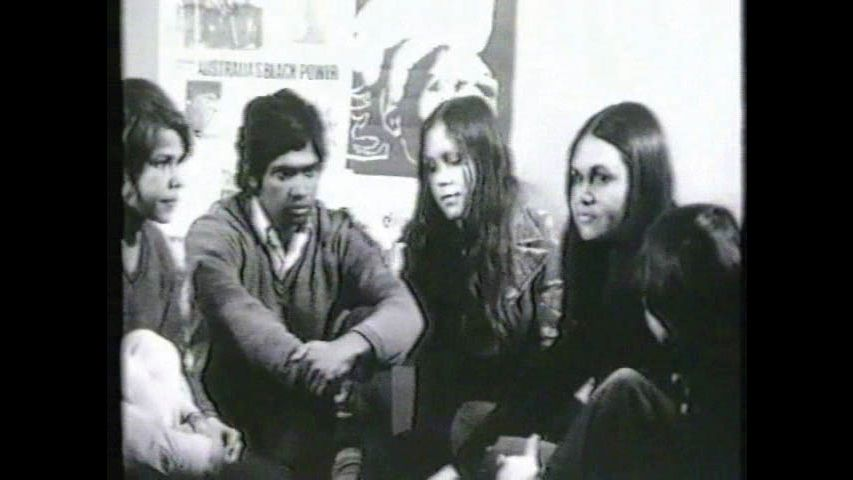
Ned Lander’s Wrong Side of the Road (1981) is a landmark achievement in Australian cinema and, crucially, in Australian Indigenous filmmaking. With its tagline proclaiming “Port Adelaide to Point Pearce. Cars, cops, cattle stations and driving rock and reggae. Two days in the lives of aboriginal bands,” 1 the film unapologetically centers Indigenous experiences. Following the journeys of the Aboriginal bands US Mob and No Fixed Address, Wrong Side of the Road is more than just a road movie; it is a powerful exploration of Indigenous identity, resilience, and the pervasive realities of racism in Australia. As a film directed by an Indigenous filmmaker, Lander’s work offered an authentic and unfiltered glimpse into the lives and perspectives of contemporary Aboriginal people, a stark contrast to the often-romanticized or victim-focused portrayals by non-Indigenous filmmakers. The film’s raw energy and its focus on Indigenous cultural expression through music marked a significant step towards self-representation and the articulation of Indigenous experiences on their own terms.
The concurrent development of Indigenous-controlled radio initiatives further underscores this growing assertion of voice. Maureen Watson and Tiga Bayles’s tireless advocacy for airtime on Radio Skid Row and 2SER culminated in the establishment of Radio Redfern in 1981. Starting as a modest ten-minute slot and evolving into a powerful voice broadcasting for extensive hours weekly, Radio Redfern became a vital platform for the local Indigenous community in Sydney. As documented in the later film 88.9 Radio Redfern, the station fostered local involvement, provided training, and empowered Indigenous people to share their stories directly. Similarly, ABC Radio’s commencement of Indigenous Australian community broadcasting in 1981, with its first broadcast from Alice Springs and subsequent expansion to Far North Queensland, including programming in local languages, demonstrated a growing, albeit institutionally driven, recognition of the need to reach and communicate with Indigenous communities on their own terms.
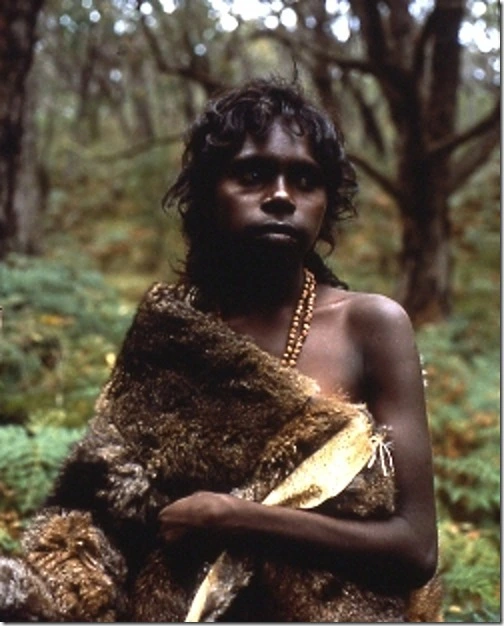
A truly pivotal moment in shifting the landscape of Indigenous representation on Australian television was the 1983 miniseries Women of the Sun. Though directed by non-Indigenous directors, the series was groundbreaking for its focus on the experiences of four Aboriginal women across different historical periods. Importantly, the writing process involved significant consultation with Indigenous communities and historians, aiming for a greater degree of authenticity than had been previously seen in mainstream productions. The powerful performances by Indigenous actresses like Justine Saunders, who also played a key role in advocating for the project, brought a much-needed depth and humanity to Indigenous female characters. Women of the Sun resonated deeply with audiences, both Indigenous and non-Indigenous, offering a stark and moving portrayal of the impact of colonization and systemic racism on Aboriginal women's lives, their resilience, and their cultural strength. Its success and the critical acclaim it received arguably marked a turning point, demonstrating the power and audience appeal of centering Indigenous stories and perspectives, even within a mainstream television format. It undoubtedly influenced subsequent productions and contributed to a greater, though still developing, awareness of the need for more nuanced and authentic portrayals of Indigenous Australians, particularly women, in film and television.
The inclusion of Indigenous actors in mainstream television programs like A Country Practice (1982-1993), while offering some visibility, often presented complex issues of representation. While actors like those appearing in the episodes "Suffer Little Children" and "Carpe Diem" were present, the narratives and character development were largely controlled by non-Indigenous writers and directors. The extent to which these roles offered nuanced portrayals or reinforced existing stereotypes requires careful consideration. Mere inclusion is not synonymous with meaningful representation or the amplification of Indigenous voices.
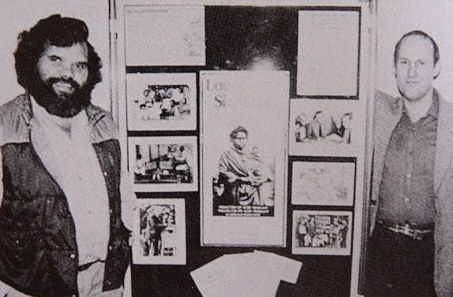
Gerald Bostock’s and Alec Morgan’s powerful short film Lousy Little Sixpence (1983) stands as a searing indictment of the Stolen Generations. Bostock’s Indigenous directorial vision, combined with Morgan’s collaboration, brought to light the devastating impact of the NSW Aborigines Protection Board’s policies of forcibly removing children from their families. Through archival footage, photographs, and the poignant testimonies of Aboriginal elders, the film offered an unflinching account of this traumatic history from the perspective of those who experienced it. The film’s title, referencing the meager payment the children received for their forced labor, encapsulates the profound injustice and dehumanization inherent in this policy. Lousy Little Sixpence is a powerful example of Indigenous storytelling reclaiming a painful history and demanding accountability.
Werner Herzog’s 1984 film, Where the Green Ants Dream, presents a complex and often debated engagement with Indigenous spirituality and land rights. While Herzog’s intentions may have been to highlight the clash between Western industrialization and Indigenous cosmology, the film remains framed through a non-Indigenous, European artistic sensibility. Wandjuk Marika’s quietly powerful performance as Milritbi offers a significant Indigenous presence, but the ultimate interpretation of the Indigenous beliefs and the conflict remains mediated by Herzog’s vision. The film raises critical questions about the potential for non-Indigenous filmmakers to truly represent the intricacies and spiritual significance of Indigenous cultures without exoticizing or misinterpreting them.
The continued growth and expansion of CAAMA throughout the 1980s solidified its crucial role in Indigenous media. By 1984, alongside its vital radio broadcasts, CAAMA began producing a television “newsletter” program in multiple languages, including English. This initiative further extended Indigenous control over information dissemination and cultural representation, reaching a wider audience with Indigenous perspectives and stories. The establishment of Radio Redfern in a physical space next to the Black Theatre in Cope Street in 1984, spearheaded by Maureen Watson, Tiga Bayles, and others, fostered even greater community involvement and provided essential training opportunities for local Indigenous people to become active participants in shaping their own media narratives. CAAMA’s successful bid for a broadcast license in 1985 paved the way for Imparja Television, a landmark achievement in Indigenous broadcasting.
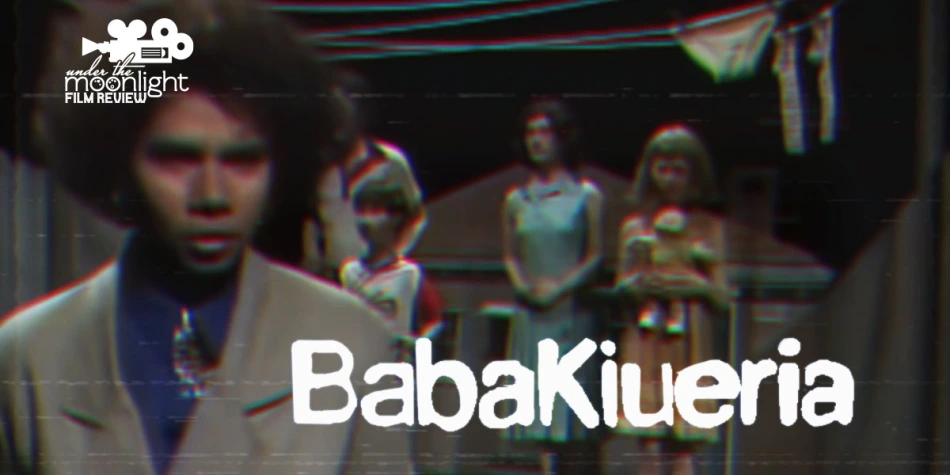
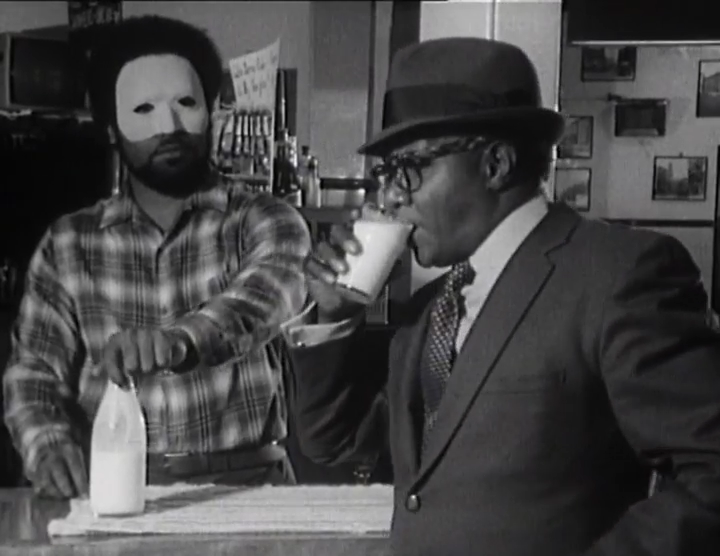
Don Featherstone’s 1986 television drama Babakiueria offered a bold and provocative satirical approach to addressing Indigenous issues. By employing role reversal, with Indigenous actors portraying the dominant culture and "whiteys" as the marginalized group, the film directly challenged racist attitudes and stereotypes. Bob Maza’s presence in this satire, alongside Michelle Torres and Kevin Smith, brought Indigenous comedic talent to the forefront in a politically charged and often uncomfortable way. While the satire was undoubtedly biting and aimed to provoke reflection, its effectiveness and potential for misinterpretation remain points for critical discussion. The use of humor to address serious issues is a powerful tool, but the potential for reinforcing harmful stereotypes, even in a satirical context, requires careful consideration.
The documentary We Are Going (1986), featuring Oodgeroo Noonuccal (Kath Walker) performing dramatic readings of her powerful poetry, offered a direct and moving articulation of Indigenous identity and loss through the voice of one of Australia’s most significant Indigenous literary figures. While directed by a non-Indigenous filmmaker, James Fielding, the film’s focus on Oodgeroo’s words and presence centered an authentic Indigenous voice, providing a powerful counterpoint to fictionalized representations.
Richard Guthrie’s 1987 documentary Karbara - The First Born stands as a vital record of a pivotal moment in the development of Indigenous storytelling in Australia. The film captured the energy and intellectual ferment of the First National Black Playwright's Conference and Workshops held at the Australian National University in Canberra in January 1987. With drama sequences directed by Brian Syron, and featuring prominent Indigenous artists and playwrights, Karbara documented the emergence of a powerful collective of Indigenous voices determined to tell their stories on their own terms for the stage and screen. The footage likely provides invaluable insights into the discussions, debates, and creative processes that shaped early Indigenous theatre and screenwriting. The very act of holding this conference and documenting it on film signifies a crucial step towards building infrastructure and fostering collaboration within the Indigenous creative community. Karbara serves as a testament to the resilience and artistic innovation of Indigenous Australians in the face of ongoing marginalization, capturing a moment where the seeds of a vibrant Indigenous storytelling movement were sown. The fact that this documentary was later broadcast on ABC TV in October 1987 highlights the growing, albeit still limited, recognition of the importance of Indigenous creative expression within mainstream media.
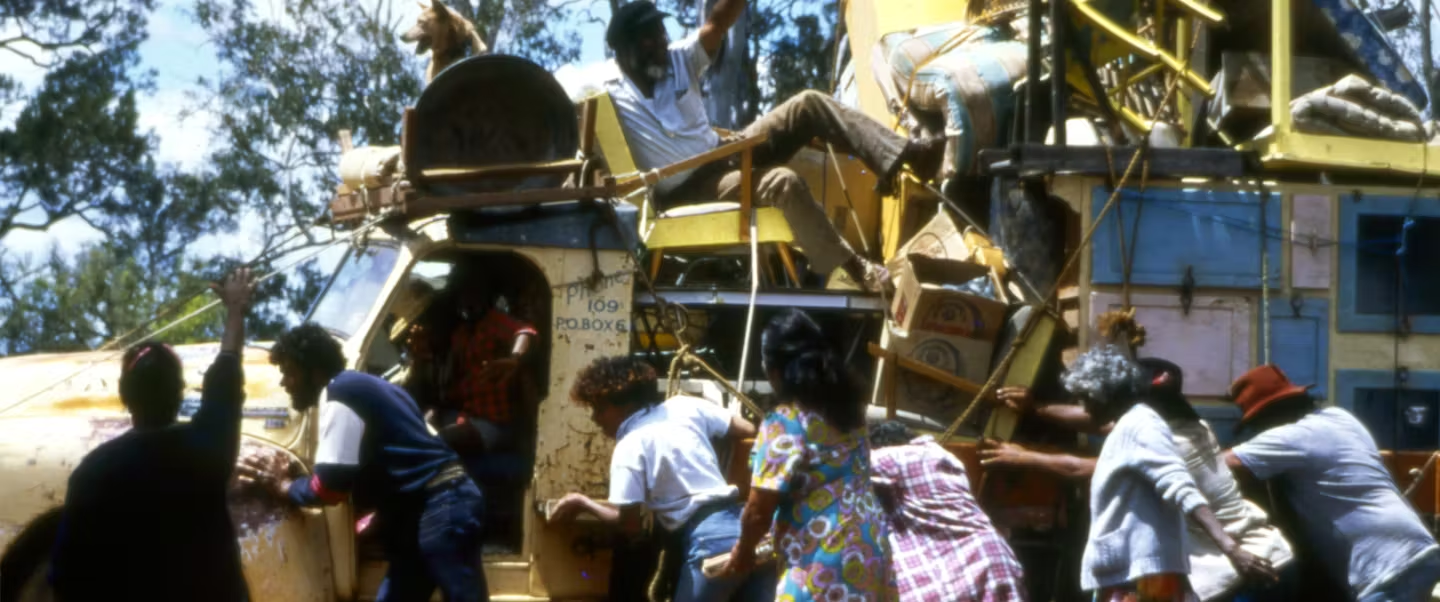
Bruce Beresford’s 1987 feature film The Fringe Dwellers explored the complex dynamics of an Indigenous family attempting to move from the fringes of white society into the mainstream. While directed by a non-Indigenous filmmaker, the film featured powerful performances from Justine Saunders, Kristina Nehm, Marlene Bell, Kylie Belling, and Ernie Dingo, bringing Indigenous actors and stories of prejudice and cultural negotiation to a wider audience. However, as with many films directed by non-Indigenous individuals, critical analysis must consider the extent to which the narrative truly centers Indigenous perspectives and avoids reinforcing stereotypical portrayals of community and identity.
The 1987 teledrama Tudawali marked a significant tribute to Robert Tudawali, the first Aboriginal film star of Jedda. Ernie Dingo’s acclaimed performance brought Tudawali’s story to a new generation, highlighting his groundbreaking achievements and the stark cultural clashes he navigated. While directed by a non-Indigenous filmmaker, Steve Jodrell, the film’s focus on Tudawali’s life and experiences offered a crucial historical perspective on Indigenous representation in Australian cinema and the personal toll it could take.
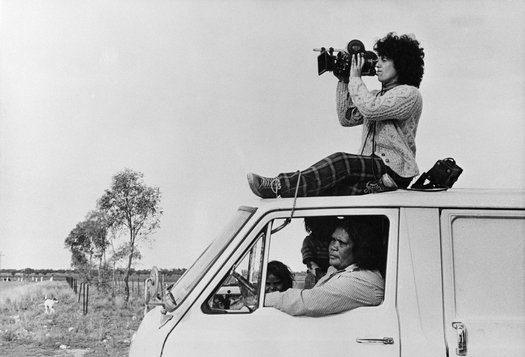
The ongoing documentary television series Nganampa Anwernekenhe (1987-present), produced by CAAMA Productions, stands as a remarkable testament to sustained Indigenous control over media production. With hundreds of episodes produced, this series, broadcast in Indigenous languages with English subtitles, has been instrumental in reflecting Aboriginal culture through storytelling, performing arts, and visual arts. Crucially, CAAMA’s commitment to training young Indigenous filmmakers, particularly women, has fostered a new generation of Indigenous storytellers, including prominent figures like Beck Cole, Rachel Perkins, and Warwick Thornton.
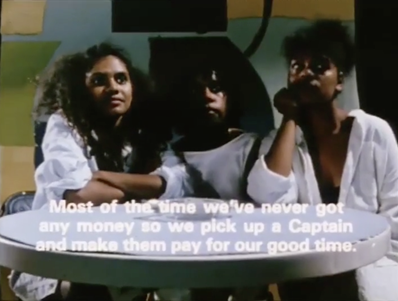
Tracey Moffatt's 1987 short film, "Nice Coloured Girls," boldly inaugurates a potent Indigenous female perspective on the intertwined issues of race and exploitation within the Australian urban landscape. Through a distinctive visual language and a subversive engagement with prevailing stereotypes, Moffatt's work challenges the dominant representations of Indigenous women. The film strategically employs irony and experimental techniques, marking the emergence of a significant and singular Indigenous artistic voice in Australian filmmaking. By directly confronting the historical sexualization of Aboriginal women, Moffatt, an Aboriginal Australian filmmaker, offers an insider's viewpoint that actively reinterprets stereotypical portrayals of Indigenous women, moving beyond simplistic binaries of oppression or hypersexuality.
Moffatt masterfully utilizes juxtaposition and opposition, interweaving a contemporary fictional narrative of three Aboriginal women in Sydney who strategically exploit a drunken white man, referred to as "Captain," with authentic historical accounts from white male colonizers. This deliberate disruption of linear cinematic form, punctuated by snapshots of colonial history and avant-garde imagery, constructs a continuous yet fractured narrative of the complex relationship between Aboriginal women and white men across time. The film's brilliance lies in its ability to simultaneously depict the ongoing impact of colonial attitudes while showcasing the agency of the contemporary Indigenous women, who strategically manipulate the very stereotypes imposed upon them to their own advantage. The concluding scene, where the women abscond with the "Captain's" wallet, encapsulates this duality, embodying both the historical marginalization and the enduring resilience of Aboriginal women in the face of colonial legacies.
The establishment of Imparja Television in 1988 by CAAMA was a landmark achievement. As a commercial television station owned and operated by Indigenous Australians, broadcasting out of Alice Springs to a vast audience in multiple languages with English subtitles, Imparja represented a significant step towards media ownership and control. The station’s commitment to producing Indigenous-led content, exemplified by Nganampa-Anwernekenhe becoming the first entirely Indigenous language television program with English subtitles, showcased the richness and diversity of Indigenous cultures and languages on a mainstream platform.
The active role of Radio Redfern in organizing Indigenous participation in protests against the 1988 Commonwealth Games and Bicentenary celebrations highlights the crucial role of Indigenous media as a platform for political expression and resistance. These events, marking the bicentennial of European settlement, were met with widespread Indigenous protests, and Indigenous-controlled media played a vital role in amplifying these voices and challenging celebratory narratives.
Bob Ellis’s documentary Dreaming of Lords (1988), narrated by Ernie Dingo, offered a unique perspective on Australian history and identity through the lens of a pilgrimage by Aboriginal cricketers to England. While directed by a non-Indigenous filmmaker, the film’s focus on the legacy of the 1868 Aboriginal cricket team and the journey of their contemporary successors provided a powerful commentary on race, sport, and historical memory.
Pat Fiske’s observational documentary Australian Daze (1988), while a broader project capturing the bicentennial anniversary, included essential footage of Indigenous demonstrations and protests. This inclusion, even within a non-Indigenous-led project, provides a crucial visual record of Indigenous responses to an anniversary that marked dispossession and injustice, offering a vital counterpoint to celebratory narratives.
Martha Ansara’s 1989 documentary Always Was Always Will Be directly addressed the critical issue of land rights, focusing on the dispute over sacred Waugul grounds at Kings Park and the Old Swan Brewery site. As an Indigenous-directed film, Always Was Always Will Be offered an essential Indigenous perspective on the spiritual and cultural significance of land, providing crucial context for understanding land rights claims.
The 1980s, therefore, represent a pivotal decade in the history of Indigenous Australian film and media. While non-Indigenous filmmakers continued to engage with Indigenous themes, the decade witnessed the transformative rise of Indigenous-controlled media organizations like CAAMA and radio stations like Radio Redfern. The profound influence of Women of the Sun, alongside the emergence of powerful Indigenous filmmakers like Gerald Bostock and Tracey Moffatt, and the growing presence of Indigenous actors and stories on screen, marked a significant shift towards self-representation and the amplification of Indigenous voices. The documentation of the First National Black Playwrights Conference in Karbara - The First Born further underscores the burgeoning of Indigenous creative expression across different mediums, laying the crucial foundation for the flourishing of Indigenous filmmaking and storytelling that would follow.
It should be emphasised that Australian Indigenous filmmakers are uniquely positioned to address critical contemporary issues facing First Nations peoples and communities, particularly those related to complex identity formation, in ways that traditional ethnographic and narrative-based filmmakers cannot. It could be argued that while non-Indigenous Australian anthropologists and filmmakers have historically claimed authority over "authentic" visual representations of indigenous peoples through ethnographic and narrative-based film, the proliferation of indigenous-made films and television in the 1980’s has challenged this monopoly. Indigenous Australian filmmakers, operating from liminal positions between multiple communities and cultural contexts, are better equipped to engage with the subjective, hybrid identities that characterize contemporary indigenous experience. Unlike non-Indigenous filmmakers who maintain analytical distance as "outsiders," indigenous filmmakers can critically examine identity discourse from within their own lived experiences while simultaneously offering broader perspectives gained through formal training and exposure to multiple cultural contexts.
The 1980s was a transformative decade in Australian film and media, marked by a significant increase in Indigenous self-representation. Key themes include the establishment of Indigenous-controlled media organizations like CAAMA and Radio Redfern, which empowered Indigenous communities to control their narratives; the emergence of influential Indigenous filmmakers like Ned Lander, Gerald Bostock, and Tracey Moffatt; and the growing presence of Indigenous actors and stories in mainstream productions, exemplified by Women of the Sun. While acknowledging the continued presence of non-Indigenous filmmakers engaging with Indigenous themes (e.g., Manganinnie, Where the Green Ants Dream), the crucial shift towards Indigenous agency and the articulation of Indigenous experiences from Indigenous perspectives must be emphasised. Modern Indigenous Australian perspectives and pedagogy would likely celebrate the achievements of this era in establishing infrastructure and fostering Indigenous creative talent, while critically assessing the limitations and potential for misrepresentation in films still directed by non-Indigenous filmmakers. These films should be watched and analyzed to understand the historical context of this shift, to appreciate the groundbreaking work of Indigenous media pioneers, and to trace the ongoing evolution of Indigenous self-representation in Australian film and media.
From an Indigenous Australian critical viewpoint, the 1980s represent a pivotal, yet complex, era in the journey towards self-representation. While the increased presence of Indigenous actors and stories in mainstream productions like Manganinnie and Women of the Sun offered a degree of visibility, these narratives often remained framed through a non-Indigenous lens, potentially diluting the nuances of Indigenous experience and reinforcing colonial power dynamics. The true power of this decade lies in the establishment and flourishing of Indigenous-controlled media organizations like CAAMA and Radio Redfern, which provided crucial platforms for self-determination in storytelling, broadcasting in Indigenous languages, and directly addressing community needs and political aspirations, as evidenced by Radio Redfern's role in the 1988 protests. The emergence of groundbreaking Indigenous filmmakers like Ned Lander, Gerald Bostock, and Tracey Moffatt, alongside the documentation of the First National Black Playwrights Conference in Karbara - The First Born, signifies a critical assertion of Indigenous agency and a move beyond being merely represented to becoming the narrators of their own realities. Therefore, while acknowledging the steps towards visibility within mainstream media, an Indigenous critical perspective prioritizes and celebrates the foundational acts of self-determination in media production that truly empowered Indigenous voices and laid the groundwork for the future of Indigenous storytelling on screen.
References
Film References
Ansara, M. (Director) (1989) Always Was Always Will Be.
Bostock, G. & Morgan, A. (Directors) (1983) Lousy Little Sixpence.
Cavadini, A. & Strachan, C. (Directors. (1981). Two Laws (1981).
Ellis, R. (Director) (1988) Dreaming of Lords.
Featherstone, D. (Director) (1986) Babakiueria.
Guthrie, R. (Director) (1987) Karbara - The First Born.
Herzog, W. (Director) (1984) Where the Green Ants Dream.
Honey, J. (Director) (1980) Manganinnie.
Jodrell, S. (Director) (1987) Tudawali.
Lander, N. (Director) (1981) Wrong Side of the Road.
Schepisi, F. (Director) (1976) Storm Boy.
Various Directors (1983) Women of the Sun (TV Miniseries). Australian Broadcasting Corporation (ABC).
Various Directors (1987-Present) Nganampa Anwernekenhe (TV Series). CAAMA Productions.
Watson, M. & Bayles, T. (1988) 88.9 Radio Redfern.
Books
Batty, P. (2007). Black Tracks: Contemporary Aboriginal and Torres Strait Islander Performance. University of Queensland Press.
Bell, W. (May 2008). "2". A Remote Possibility: The Battle for Imparja Television. Alice Springs: IAD Press.
Birriwa, M. (2010). Black Screen: Indigenous Australians and Cinema. Metro Magazine, 164, 30-35.
Martin, A. (1993). Phantom Signs: Australian Independent Film, 1978-1993. Flicks Books.
Murray, S. (2007) The cinema of Australia. Eastgardens, NSW: McGraw-Hill Australia.
Pike, A. & Cooper, R. (1998) Australian film 1900-1977: A guide to feature film production. Revised edition. Melbourne: Oxford University Press.
Smith, R. (2002) Australian film. Melbourne: Schwartz Publishing.
Turner, G. (2006) Film as social practice. 4th edn. London: Routledge.
Academic Articles
Batty, P. (2011). '“We’re not just victims”: challenging representations of Indigenous Australians in documentary film'. Studies in Documentary Film, 5(1), 5-19.
Langton, M. (2003) Beyond the burden of history in Indigenous Australian cinema. Film Studies, 20(1), 36-53.
Moffatt, T. (1987) Nice Coloured Girls.
Websites
Ackinclose, H. (2021). Film reviews for anthropology passionates. Hailey Ackinclose – Nice Coloured Girls. [online] Available at: https://ethnonlinefilms.ca/2021/12/09/hailey-ackinclose-nice-coloured-girls/
[Accessed 19 Apr. 2025].
Central Australian Aboriginal Media Association (CAAMA). Available from: https://caama.com.au/
Eckersley, M. (2014, May 26). Australian Indigenous Drama on Film. Australian Indigenous Drama. Available from: https://australianindigenousdrama.blogspot.com/2014/05/australian-indigenous-drama-on-film.html
Imparja Television. Available from: https://www.imparja.com/
Krausz, P. (n.d.). Screening Indigenous Australia: An overview of Aboriginal representation on film. [online] Available at: https://kooriweb.org/foley/resources/media/indigenousfilm.pdf.
Melville, K. (2023). Making Manganinnie. [online] ABC listen. Available at: https://www.abc.net.au/listen/programs/the-history-listen/the-history-listen-mangannine-mawuyul-yanthalawuy/14134956
[Accessed 19 Apr. 2025].
NFSA. (2015). Restoring history: Alec Morgan’s ‘Lousy Little Sixpence’ | NFSA. [online] Nfsa.gov.au. Available at: https://www.nfsa.gov.au/latest/lousy-little-sixpence-alec-morgan
Masters Thesis
Hampton, S. (2010) Reorienting the Feminine Other in Australian Film. BA thesis, University of Queensland. Available from: https://espace.library.uq.edu.au/view/UQ:3b58300/s44184267_final_thesis.pdf
Doctoral Thesis
Debenham, J.A. (2013) Representations of Aborigines in Australian Documentary Film 1901 - 2009. PhD thesis, University of Newcastle. Available from: https://nova.newcastle.edu.au/vital/access/services/Download/uon:13508/ATTACHMENT01
Frey, A. (2015) Eco-Fourth Cinema: Indigenous Rights and Environmental Crises. PhD thesis, University of Queensland. Available from: https://espace.library.uq.edu.au/view/UQ:f232a64/s4330872_final_thesis.pdf